The Battle of Odds: Understanding House Edge in Slot Machines
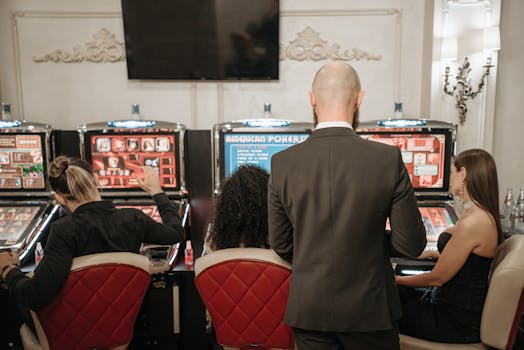
Slot machines have long been a staple of casinos, both in the glittering halls of Las Vegas and the virtual realms of online gambling. Their flashing lights, engaging sounds, and tantalizing jackpots attract millions of players every year. Yet, beneath the mesmerizing surface lies a critical concept that shapes every spin: the house edge. Understanding this hidden mathematical advantage is essential for any slot enthusiast who wants to play smarter, manage expectations, and enjoy the experience with open eyes. In this article, we delve deep into the battle of odds, revealing exactly how the house edge works in slot machines, how it compares to other casino games, and what it means for your wallet.
What Is House Edge? The Mathematical Backbone of Casino Games
The house edge is the built-in advantage that ensures casinos turn a profit over time. Expressed as a percentage, it represents the average amount of each bet that the casino expects to keep. For example, a house edge of 5% means that, over the long run, the casino theoretically retains $5 for every $100 wagered.
Slot machines are engineered with a specific house edge determined by their pay tables and random number generators (RNGs). While the outcome of any single spin is unpredictable, the underlying mathematics ensures that, across thousands or millions of spins, the casino’s edge prevails.
.png)
A few key facts about house edge:
- Slot machine house edges typically range from 2% to 15%, depending on the game and jurisdiction. - In comparison, European roulette has a house edge of 2.7%, while blackjack can be as low as 0.5% with optimal play. - The average slot machine house edge in Las Vegas Strip casinos is about 7% (as of 2023 according to the Nevada Gaming Control Board).This mathematical certainty is why casinos remain profitable, regardless of occasional player wins or big jackpots.
How Slot Machines Set the House Edge: Behind the Reels
Unlike table games, where rules and player decisions influence the outcome, slot machines rely entirely on programming and chance. Each slot is designed with a specific payback percentage, also called Return to Player (RTP). RTP is the flip side of house edge: if a slot has a 95% RTP, its house edge is 5%.
The process works as follows:
1. Game designers assign probabilities to each symbol combination using an RNG. 2. The payout for each combination is set based on these probabilities. 3. The overall payout schedule is calibrated so that, over millions of spins, the machine returns a fixed percentage to players.For example, if a slot’s RTP is 92%, players will theoretically receive $92 for every $100 wagered, while the casino keeps $8 (the house edge). However, outcomes are highly volatile in the short term, and jackpots or bonus rounds can shift individual fortunes dramatically.
Notably, online slots often boast higher RTPs (96-98%) than their land-based counterparts, thanks to lower operating costs and increased competition among online casinos.
House Edge: Slot Machines vs. Other Casino Games
To put slot machine odds into perspective, let’s compare their house edge to other popular casino games. The following table provides a data-driven overview:
| Casino Game | Typical House Edge (%) |
|---|---|
| Slots (Las Vegas Average) | 7.0 |
| Slots (Online High RTP) | 3.0 |
| Roulette (European) | 2.7 |
| Roulette (American) | 5.3 |
| Blackjack (Optimal Play) | 0.5 |
| Baccarat | 1.06 (Banker bet) |
| Craps (Pass Line) | 1.41 |
| Keno | 25.0 |
As the table shows, slot machines generally offer a higher house edge than table games, especially when compared to blackjack or baccarat. This means that, on average, your money lasts longer at the tables—unless you hit a big slot jackpot.
Volatility and Variance: Why House Edge Isn’t the Whole Story
While house edge gives a crucial overview of expected losses, it doesn’t capture the full experience of playing slots. Another key factor is volatility (also known as variance), which measures how much and how frequently payouts occur.
- High volatility slots: Pay out less frequently, but wins (including jackpots) are larger. These appeal to risk-takers chasing big prizes. - Low volatility slots: Deliver frequent, smaller wins, helping bankrolls last longer but with fewer chances for a life-changing payout.Two slots can have the same house edge but feel dramatically different due to volatility. For example, a progressive jackpot slot may have a 6% house edge but offer massive, rare payouts, while a classic fruit machine with the same edge gives out regular small prizes.
Understanding both house edge and volatility helps players choose games that match their risk tolerance and entertainment preferences.
The Hidden Impact of House Edge: Time on Device and Player Behavior
Casinos design slot machines not just to maximize house edge, but also to keep players engaged as long as possible—a metric known as "Time on Device" (TOD). The longer a player spends at a machine, the more spins they make, and the more the house edge works in the casino’s favor.
Some numbers illustrate this effect:
- The average slot player makes 600-700 spins per hour. - If you wager $1 per spin on a slot with a 7% house edge and play 600 spins per hour, your theoretical loss per hour is $42.600 spins x $1 x 7% = $42
Of course, individual results will vary, but the mathematics are relentless over time. This is why understanding the house edge is crucial for bankroll management and realistic expectations.
Slot manufacturers also use features like near-misses, bonus rounds, and immersive graphics to encourage longer play sessions, subtly increasing the house edge’s effectiveness over time.
Can You Beat the House Edge? Myths and Realities
A common question is whether savvy players can overcome the house edge in slots. The short answer: No, not in the long term. Unlike skill-based games like blackjack, slots are games of chance with outcomes determined by RNG algorithms.
Some persistent myths include:
- "Hot" or "cold" machines: In reality, every spin is independent. Past outcomes do not influence future results. - Timing or betting patterns: No strategy can alter the house edge or change the odds coded into the machine.However, players can make informed choices to minimize losses:
- Choose slots with a higher RTP (lower house edge). - Set strict budgets and time limits. - Take advantage of casino bonuses and loyalty programs, which can slightly offset the house edge.Ultimately, slots should be viewed as entertainment, not a way to make money.
Conclusion: Playing Smart in the Battle of Odds
The house edge is the silent force that shapes every slot machine, ensuring casinos stay profitable while providing players with thrilling experiences. By understanding how the house edge works—along with the impact of volatility, time on device, and realistic expectations—players can make smarter choices, enjoy their time at the slots, and avoid common pitfalls.
Remember, while luck can deliver big wins in the short term, the mathematics of the house edge always prevails in the end. Play responsibly, choose games that match your entertainment preferences, and never chase losses. In the battle of odds, knowledge is your best ally.